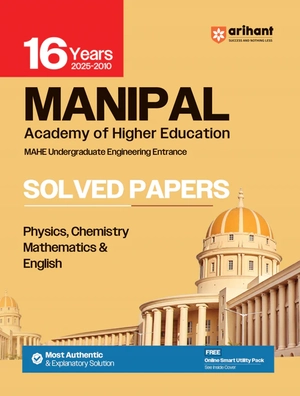
The Manipal Entrance Test(MET) for Engineering is conducted by the Manipal Academy of Higher Education (MAHE) every year to provide admissions in various UG and PG courses including Engineering and Medical. Based on the candidates’ scores obtained in the MET exam, the candidates apply for B.Tech courses offered by MIT Manipal & MIT Bangalore (MAHE Manipal), SMT Sikkim (SMU Sikkim) and Manipal University (MU) Jaipur.
The Manipal Entrance Examination (MET) 2025 will be conducted in two phases as given below
Event (Phase 1) | |
MET events | Date 2025 |
Online Application Form | 2nd week of October, 2024 |
Last Date to Apply Online | 1st week of April, 2025 |
Admit Card Release | 2nd week of April, 2025 |
MET 2025 Entrance Exam | 3rd week of April, 2025 |
Result Declared | 2nd week of June, 2025 |
Event (Phase 2) | |
Application Form | October, 2024 Phase 1 |
Last Date to Apply | April, 2025 |
Online Test Booking Dates | 1st week of May, 2025 |
Release of Admit Card | 2nd week of May, 2025 |
MET 2025 Exam Date | 3rd week of May, 2025 |
Result Declared | 2nd week of June, 2025 |
Counselling Procedure Start | 2nd Week of June, 2025 |
After the announcements of the results, the concerned data is collected and organised for seat allocation. This is followed by student counselling procedures based on the rank obtained in the examination. Seats are assigned to students on the basis of the number of seats available in the university.
Mode of Examination MAHE conducts MET in Computer Based Test(CBT) mode only.
Medium of the Question Paper English is the only medium in which the MET is conducted.
Qualification The candidate must have passed Class 12 or equivalent examination from a board recognised by the concerned State or Central Government with Physics, Mathematics and English as compulsory subjects along with Chemistry / Biotechnology / Biology / any technical vocational subject as optional, with minimum 50 % aggregate marks taken together in Physics, Mathematics and any one of the optional subjects.
Age Limit There is no age limit for appearing in this examination. Candidates who have passed Class 12 examination or equivalent examination in the year 2023, 2024 or appearing in 2025 an appear in MET 2025.
Exam Pattern
The MET entrance exam for B.Tech contains 4 sections- Mathematics/Biology, Physics, Chemistry and English.
Sections | Number of Questions | Marks | Time |
Mathematics/Biology | 20 | 80 | 120 Minutes of 2 Hours |
Physics | 15 | 60 | |
Chemistry | 15 | 60 | |
English |
|
| |
Total Number of Questions | 60 | ||
Total Marks | 240 | ||
The exam contains two types of questions in every subject such as multiple choice questions and numerical type questions from the concerned section.
Syllabus
Candidates appearing for MET 2025 can go through the syllabus given below
MET Maths Syllabus 2024
Sets and Functions | Sets Sets and their representations, The empty set, Finite and infinite sets, Equal sets, Subsets, Power set, Universal set, Venn Diagrams, Operation on Sets, Complement of a set, Union and intersection of two sets, Relations and Functions Cartesian product of sets, relations and functions. Trigonometric Functions Angles, Trigonometric functions, Trigonometric functions of sum and difference of two angles and trigonometric equations. |
Algebra | Mathematical Induction Motivation, Principle of mathematical induction. Numbers and Quadratic Equations Complex numbers, Algebra of complex numbers, The modulus and the conjugate of a complex number, Argand plane and polar representation and Quadratic equations. Linear Inequalities Inequalities, Algebraic solutions of linear inequalities, graphical solution and solution of system of linear inequalities in two variables. Permutations and Combinations: Permutations and Combinations, Derivation of formulae and their connections. Binomial Theorem Binomial theorem for positive integral indices, General and middle terms, Application. Sequence and Series Sequences, Series, Arithmetic progression, Geometric progression, Relationship between AM and GM, sum to n terms of special series. Matrices Matrix, types, operations, Transpose, Symmetric and skew symmetric matrices, elementary operation, Invertible matrices. Determinants Properties, Area of a triangle, minors and cofactors, Adjoint and inverse of a matrix, applications. |
Coordinate Geometry | Straight Lines Slope of a line, Various forms of the equation of a line, General equation of a line, Distance of a point from a line Conic Sections Section of a cone, Circle, Parabola, Ellipse, Hyperbola. Introduction to Three-dimensional Geometry Coordinate axes and coordinate planes in three- dimensional space, Coordinates of a point in space, Distance between two points, Section formula. Limits and Derivatives Intuitive idea of derivatives, Limits of trigonometric functions, Derivatives. Continuity and Differentiability Exponential and logarithmic functions, logarithmic differentiation, Derivatives of functions in parametric forms, Second order derivative, Mean value theorem. |
Calculus | Applications of Derivatives Rate of change of quantities, Increasing and decreasing functions, Tangents and normals Approximations Maxima and Minima Integrals and their Application Integration, methods of integration, Integrals of some particular functions, Integration by partial fractions, Integration by parts, Definite Integral, Fundamental theorem of calculus, Evaluation of definite integrals by substitution, Properties of definite integrals, Area under simple curves and two curves. Differential Equations Basic concepts, General and particular solutions of a differential equation, formation of a differential equation, methods of solving first order, first degree differential equations. |
Mathematical Reasoning | Statements, New statements from old, Special words/phrases, Implications, Validating statements. Statistics and Probability Measure of dispersion, Range, Mean deviation, Variance and standard deviation, Analysis of frequency distributions, Random experiments, Event, Axiomatic approach to probability, Conditional probability, multiplication theorem on probability, Independent events, Bayes’ theorem, Random variables and its probability distributions, Bernoulli trials and binomial distribution. Relations and Functions Types of relations and functions, Composition of functions and invertible function, Binary operations. Inverse Trigonometric Functions Basic concepts, Properties of inverse trigonometric functions, Vector algebra: Basic concepts, types of vectors, Addition of vectors, Multiplication of a vector by a scalar, Product of two vectors. Three-Dimensional Geometry Direction cosines and direction ratios of a line, Equation of a line in space, Angle between two lines, Shortest distance between two lines, Plane, Coplanarity of two lines, Angle between two planes, Distance of a point from a plane, Angle between a line and a plane. Linear programming Problem and its mathematical formulation, different types of linear programming problems. |
MET Physics Syllabus 2025
Physical World and Measurement | Physical World Physics-scope and excitement, nature of physical laws, Physics, technology and society. Units and Measurements Need for measurement, Units of measurement, systems of units, SI units, fundamental and derived units. Length, mass and time measurements, accuracy and precision of measuring instruments, errors in measurement, significant figures. Dimensions of physical quantities, dimensional analysis and its applications. |
Kinematics | Motion in a Straight Line Elementary concepts of differentiation and integration for describing motion, uniform and non- uniform motion, average speed and instantaneous velocity, uniformly accelerated motion, velocity - time and position-time graphs. Relations for uniformly accelerated motion. Motion in a Plane Scalar and vector quantities, position and displacement vectors, general vectors and their notations, equality of vectors, multiplication of vectors by a real number, addition and subtraction of vectors, relative velocity, Unit vector, resolution of a vector in a plane, rectangular components, Scalar and Vector product of vectors. Motion in a plane, cases of uniform velocity and uniform acceleration-projectile motion, uniform circular motion. |
Laws of Motion | Intuitive concept of force, Inertia, Newton’s first law of motion, momentum and Newton’s second law of motion, impulse, Newton’s third law of motion, Law of conservation of linear momentum and its applications, Equilibrium of concurrent forces, Static and kinetic friction, laws of friction, rolling friction, lubrication. Dynamics of uniform circular motion Centripetal force, examples of circular motion. |
Work, Energy and Power | Work done by a constant force and a variable force, kinetic energy, work-energy, theorem, power, Notion of potential energy, potential energy of a spring, conservative forces, conservation of mechanical energy (kinetic and potential energies), non-conservative forces: motion in a vertical circle, elastic and inelastic collisions in one and two dimensions. |
Motion of System of Particles and Rigid Body | System of Particles and Rotational Motion Centre of mass of a two-particle system, momentum conservation and centre of mass motion. Centre of mass of a rigid body, centre of mass of a uniform rod. Moment of a force, torque, angular momentum, law of conservation of angular momentum and its applications, Equilibrium of rigid bodies, rigid body rotation and equations of rotational motion, comparison of linear and rotational motions, Moment of inertia, radius of gyration, values of moments of inertia for simple geometrical objects. |
Gravitation | Universal law of gravitation. Acceleration due to gravity (recapitulation only) and its variation with altitude and depth, Gravitational potential energy and gravitational potential, escape velocity, orbital velocity of a satellite, Geo- stationary satellites. |
Mechanical Properties of Solids | Stress-strain relationship, Hooke’s law, Young’s modulus, bulk modulus. Mechanical Properties of Fluids Pressure due to a fluid column, Pascal’s law and its applications (hydraulic lift and hydraulic brakes), effect of gravity on fluid pressure. Viscosity, Stokes’ law, terminal velocity, streamline and turbulent flow, critical velocity, Bernoulli’s theorem and its applications. Surface energy and surface tension, angle of contact, excess of pressure across a curved surface, application of surface tension ideas to drops, bubbles and capillary rise. Thermal Properties of Matter Heat, temperature, (recapitulation only) thermal expansion, thermal expansion of solids, liquids and gases, anomalous expansion of water, specific heat capacity, Cp, Cv - calorimetry, change of state - latent heat capacity. Heat transfer-conduction, convection and radiation, thermal conductivity, qualitative ideas of Blackbody radiation, Wein’s displacement Law, Stefan’s law, Greenhouse effect. |
Thermodynamics | Thermal equilibrium and definition of temperature (zeroth law of thermodynamics), heat, work and internal energy. First law of thermodynamics, isothermal and adiabatic processes. Second law of thermodynamics: reversible and irreversible processes
|
Kinetic Theory | Behaviour of Perfect Gases and Kinetic Theory of Gases, Equation of state of a perfect gas, work done in compressing a gas. Kinetic theory of gases - assumptions, concept of pressure. Kinetic interpretation of temperature, rms speed of gas molecules, degrees of freedom, law of equipartition of energy (statement only) and application to specific heat capacities of gases, concept of mean free path, Avogadro’s number. |
Oscillations | Periodic motion - time period, frequency, displacement as a function of time, periodic functions, Simple harmonic motion (S.H.M) and its equation, phase, oscillations of a loaded spring restoring force and force constant, energy in S.H.M. Kinetic and potential energies, simple pendulum derivation of expression for its time period. Free, forced and damped oscillations (qualitative ideas only), resonance, waves: Wave Motion Transverse and longitudinal waves, speed of travelling wave, displacement relation for a progressive wave, principle of superposition of waves, reflection of waves, standing waves in strings and organ pipes, Beats. |
Electrostatics | Electric Charges and Fields: Electric Charges, Conservation of charge, Coulomb’s law-force between two-point charges, forces between multiple charges, superposition principle and continuous charge distribution. Electric field, electric field due to a point charge, electric field lines, electric dipole, electric field due to a dipole, torque on a dipole in uniform electric field. Electric flux, statement of Gauss’s theorem and its applications to find field due to infinitely long straight wire, uniformly charged infinite plane sheet. Electrostatic Potential and Capacitance Electric potential, potential difference, electric potential due to a point charge, a dipole and system of charges, equipotential surfaces, electrical potential energy of a system of two-point charges and of electric dipole in an electrostatic field. Conductors and insulators, free charges and bound charges inside a conductor. Dielectrics and electric polarisation, capacitors and capacitance, combination of capacitors in series and in parallel, capacitance of a parallel plate capacitor with and without a dielectric medium between the plates, energy stored in a capacitor. |
Current Electricity | Current Electricity Electric current, flow of electric charges in a metallic conductor, drift velocity, mobility and their relation with electric current, Ohm’s law, electrical resistance, V-I characteristics (linear and non-linear), electrical energy and power, electrical resistivity and conductivity, temperature dependence of resistance. Internal resistance of a cell, potential difference and emf of a cell, combination of cells in series and in parallel, Kirchhoff’s laws and simple applications, Wheatstone bridge, metre bridge (qualitative ideas only) Potentiometer - principle and its applications to measure potential difference and for 14 comparing EMF of two cells, measurement of internal resistance of a cell (qualitative ideas only) |
Magnetic Effects of Current and Magnetism | Moving Charges and Magnetism Concept of magnetic field, Oersted’s experiment. Biot - Savart law and its application to current carrying circular loop. Ampere’s law and its applications to infinitely long straight wire. Straight and toroidal solenoids (only qualitative treatment), force on a moving charge in uniform magnetic and electric fields Force on a current-carrying conductor in a uniform magnetic field, force between two parallel current-carrying conductors-definition of ampere, torque experienced by a current loop in uniform magnetic field, moving coil galvanometer-its current sensitivity and conversion to ammeter and voltmeter. Magnetism and Matter Current loop as a magnetic dipole and its magnetic dipole moment, magnetic dipole moment of a revolving electron, bar magnet as an equivalent solenoid, magnetic field lines, Earth’s magnetic field and magnetic elements. |
Electromagnetic Induction and Alternating Currents | Electromagnetic Induction Electromagnetic induction, Faraday’s laws, induced EMF and current, Lenz’s Law, Eddy currents. Self and mutual induction. Alternating currents, peak and RMS value of alternating current/voltage, reactance and impedance, LC oscillations (qualitative treatment only), LCR series circuit, resonance, power in AC circuits AC generator and transformer. |
Electromagnetic Waves | Electromagnetic waves, their characteristics, their Transverse nature (qualitative ideas only). Electromagnetic spectrum (radio waves, microwaves, infrared, visible, ultraviolet, X-rays, gamma rays) including elementary facts about their uses. |
Optics | Ray Optics and Optical Instruments: Ray Optics, Refraction of light, total internal reflection and its applications, optical fibres, refraction at spherical surfaces, lenses, thin lens formula, lensmaker’s formula, magnification, power of a lens, combination of thin lenses in contact, refraction of light through a prism. Optical instruments: Microscopes and astronomical telescopes (reflecting and refracting) and their magnifying powers. Wave optics Wave front and Huygen’s principle, reflection and refraction of plane wave at a plane surface using wave fronts. Proof of laws of reflection and refraction using Huygen’s principle. Interference, Young’s double slit experiment and expression for fringe width, coherent sources and sustained interference of light, diffraction due to a single slit, width of central maximum. |
Dual Nature of Radiation and Matter | Dual nature of radiation, Photoelectric effect, Hertz and Lenard’s observations, Einstein’s photoelectric equation-particle nature of light, Experimental study of photoelectric effect Matter waves-wave nature of particles, de-Broglie relation. |
Atoms | Alpha-particle scattering experiment, Rutherford’s model of atom, Bohr model, energy levels, hydrogen spectrum, Nuclei Composition and size of nucleus: Nuclear force Mass-energy relation, mass defect, nuclear fission, nuclear fusion. |
Electronic Devices | Semiconductor Electronics Materials, Devices and Simple Circuits Energy bands in conductors, semiconductors and insulators (qualitative ideas only) Semiconductor diode - I-V characteristics in forward and reverse bias, diode as a rectifier, Special purpose p-n junction diodes LED, photodiode, solar cell. |
MET Chemistry Syllabus 2025
Some Basic Concepts of Chemistry | General Introduction Importance and scope of chemistry, Nature of matter, laws of chemical combination, Dalton’s atomic theory concept of elements, atoms and molecules, Atomic and molecular masses, mole concept and molar mass, percentage composition, empirical and molecular formula, chemical reactions, stoichiometry and calculations based on stoichiometry. |
Structure of Atom | Bohr’s model and its limitations, concept of shells and subshells, dual nature of matter and light, de Broglie’s relationship, Heisenberg uncertainty principle, concept of orbitals, quantum numbers, shapes of s, p and d orbitals, rules for filling electrons in orbitals - Aufbau principle, Pauli’s exclusion principle and Hund’s rule, electronic configuration of atoms, stability of half-filled and completely filled orbitals. |
Classification of Elements and Periodicity in Properties | Modern periodic law and the present form of periodic table, periodic trends in properties of elements-atomic radii, ionic radii, inert gas radii, Ionisation enthalpy, electron gain enthalpy, electronegativity, valency. Nomenclature of elements with atomic number greater than 100. |
Chemical Bonding and Molecular structure | Valence electrons, ionic bond, covalent bond, bond parameters, Lewis structure, polar character of covalent bond, covalent character of ionic bond, valence bond theory, resonance, geometry of covalent molecules, VSEPR theory, concept of hybridisation, involving s, p and d orbitals and shapes of some simple molecules, molecular orbital theory of homonuclear diatomic molecules (qualitative idea only), hydrogen bond. |
States of Matter | Avogadro’s law, ideal behaviour, empirical derivation of gas equation, Avogadro’s number, ideal gas equation. Deviation from ideal behaviour, liquefaction of gases, critical temperature, kinetic energy and molecular speeds (elementary idea) Liquid State: vapour pressure, viscosity and surface tension (qualitative idea only, no mathematical derivations) |
Chemical Thermodynamics | Concepts of System and types of systems, surroundings, work, heat, energy, extensive and intensive properties, state functions. First law of thermodynamics -internal energy and enthalpy, heat capacity and specific heat, measurement of ΔU and ΔH, Hess’s law of constant heat summation, enthalpy of bond dissociation, combustion, formation, atomisation, sublimation, phase transition, ionisation, solution and dilution. Second law of Thermodynamics (brief introduction). Introduction of entropy as a state function, Gibb’s energy change for spontaneous and non- spontaneous processes, criteria for equilibrium. Third law of thermodynamics (brief introduction). |
Equilibrium | Equilibrium in physical and chemical processes, dynamic nature of equilibrium, law of mass action, equilibrium constant, factors affecting equilibrium- Le Chatelier’s principle, ionic equilibrium- ionisation of acids and bases, strong and weak electrolytes, degree of ionisation, ionisation of poly basic acids, acid strength, concept of pH, Henderson Equation, hydrolysis of salts (elementary idea), buffer solution, solubility product, common ion effect (with illustrative examples). |
Redox Reactions | Concept of oxidation and reduction, redox reactions, oxidation number, balancing redox reactions, in terms of loss and gain of electrons and change in oxidation number, applications of redox reactions. |
Hydrogen | Position of hydrogen in periodic table, occurrence, isotopes, preparation, properties and uses of hydrogen, hydrides-ionic covalent and interstitial, physical and chemical properties of water, heavy water, hydrogen peroxide - preparation, reactions and structure and use, hydrogen as a fuel. |
s-Block Elements (Alkali and Alkaline Earth Metals) | Group 1 and Group 2 Elements General introduction, electronic configuration, occurrence, anomalous properties of the first element of each group, diagonal relationship, trends in the variation of properties (such as ionisation enthalpy, atomic and ionic radii), trends in chemical reactivity with oxygen, water, hydrogen and halogens, uses. Preparation and Properties of Some Important Compounds Sodium Carbonate, Sodium Chloride, Sodium Hydroxide and Sodium Hydrogen carbonate, Biological importance of Sodium and Potassium. Calcium Oxide and Calcium Carbonate and their industrial uses, biological importance of Magnesium and Calcium. |
p-Block Elements | General Introduction to p -Block Elements Group 13 Elements General introduction, electronic configuration, occurrence, variation of properties, oxidation states, trends in chemical reactivity, anomalous properties of first element of the group, Boron - physical and chemical properties, some important compounds, Borax, Boric acid, Boron Hydrides, Aluminium: Reactions with acids and alkalies, uses. Group 14 Elements General introduction, electronic configuration, occurrence, variation of properties, oxidation states, trends in chemical reactivity, anomalous behaviour of first elements. Carbon-catenation, allotropic forms, physical and chemical properties, uses of some important compounds: oxides. Important compounds of Silicon and a few uses: Silicon Tetrachloride, Silicones, Silicates and Zeolites, their uses. |
Organic Chemistry | Some Basic Principles and Techniques General introduction, methods of purification, qualitative and quantitative analysis, classification and IUPAC nomenclature of organic compounds. Electronic displacements in a covalent bond inductive effect, electromeric effect, resonance and hyper conjugation. Homolytic and heterolytic fission of a covalent bond: free radicals, carbocations, carbanions, electrophiles and nucleophiles, types of organic reactions |
Hydrocarbons | Classification of Hydrocarbons Aliphatic Hydrocarbons Alkanes - Nomenclature, isomerism, conformation (ethane only), physical properties, chemical reactions including free radical mechanism of halogenation, combustion and pyrolysis. Alkenes - Nomenclature, structure of double bond (ethene), geometrical isomerism, physical properties, methods of preparation, chemical reactions: addition of hydrogen, halogen, water, hydrogen halides (Markownikov’s addition and peroxide effect), ozonolysis, oxidation, mechanism of electrophilic addition. Alkynes - Nomenclature, structure of triple bond (ethyne), physical properties, methods of preparation, chemical reactions: acidic character of alkynes, addition reaction of - hydrogen, halogens, hydrogen halides and water. Aromatic Hydrocarbons Introduction, IUPAC nomenclature, benzene: resonance, aromaticity, chemical properties: mechanism of electrophilic substitution. Nitration, sulphonation, halogenation, Friedel Craft’s alkylation and acylation, directive influence of functional group in monosubstituted benzene, Carcinogenicity and toxicity). |
Environmental Chemistry | Environmental pollution - air, water and soil pollution, chemical reactions in atmosphere, smog, major atmospheric pollutants, acid rain, ozone and its reactions, effects of depletion of ozone layer, greenhouse effect and global warming- pollution due to industrial wastes, green chemistry as an alternative tool for reducing pollution, strategies for control of environmental pollution. |
Solutions | Types of solutions, expression of concentration of solutions of solids in liquids, solubility of gases in liquids, solid solutions, colligative properties - relative lowering of vapour pressure, Raoult’s law, elevation of boiling point, depression of freezing point, osmotic pressure, determination of molecular masses using colligative properties, abnormal molecular mass, Van’t Hoff factor. |
Electrochemistry | Redox reactions, conductance in electrolytic solutions, specific and molar conductivity, variations of conductivity with concentration, Kohlrausch’s Law, electrolysis and law of electrolysis (elementary idea), dry cell-electrolytic cells and Galvanic cells, lead accumulator, EMF of a cell, standard electrode potential, Nernst equation and its application to chemical cells, Relation between Gibbs energy change and EMF of a cell, fuel cells, corrosion. |
Chemical Kinetics | Rate of a reaction (Average and instantaneous), factors affecting rate of reaction: concentration, temperature, catalyst, order and molecularity of a reaction, rate law and specific rate constant, integrated rate equations and half-life (only for zero and first order reactions), concept of collision theory (elementary idea, no mathematical treatment). Activation energy, Arrhenius equation. |
Surface Chemistry | Adsorption - physisorption and chemisorption, factors affecting adsorption of gases on solids, catalysis, homogenous and heterogenous activity and selectivity, enzyme catalysis colloidal state distinction between true solutions, colloids and suspension, lyophilic, lyophobic multi-molecular and macromolecular colloids, properties of colloids, Tyndall effect, Brownian movement, electrophoresis, coagulation, emulsion - types of emulsions. |
General Principles and Processes of Isolation of Elements | Principles and methods of extraction - concentration, oxidation, reduction - electrolytic method and refining, occurrence and principles of extraction of aluminium, copper, zinc and iron. |
p-Block Elements | Group 16 Elements General introduction, electronic configuration, oxidation states, occurrence, trends in physical and chemical properties, dioxygen: Preparation, Properties and uses, classification of Oxides, Ozone, Sulphur - allotropic forms, compounds of Sulphur: Preparation Properties and uses of Sulphur-dioxide. Sulphuric Acid industrial process of manufacture, properties and uses, Oxoacids of Sulphur (Structures only). Group 17 Elements General introduction, electronic configuration, oxidation states, occurrence, trends in physical and chemical properties, compounds of halogens, Preparation, properties and uses of Chlorine and Hydrochloric acid, interhalogen compounds, Oxoacids of halogens (structures only). Group 18 Elements General introduction, electronic configuration, occurrence, trends in physical and chemical properties, uses. |
‘d’ and ‘f’ Block Elements | General introduction, electronic configuration, occurrence and characteristics of transition metals, general trends in properties of the first-row transition metals - metallic character, ionisation enthalpy, oxidation states, ionic radii, colour, catalytic property, magnetic properties, interstitial compounds, alloy formation, preparation and properties of K2Cr2O7 and KMnO4. Lanthanoids - Electronic configuration, oxidation states, chemical reactivity and lanthanoid contraction and its consequences. Actinoids - Electronic configuration, oxidation states and comparison with lanthanoids. |
Coordination Compounds | Coordination compounds - Introduction, ligands, coordination number, colour, magnetic properties and shapes, IUPAC nomenclature of mononuclear coordination compounds. Bonding, Werner’s theory, VBT and CFT, structure and stereoisomerism, importance of coordination compounds (in qualitative inclusion, extraction of metals and biological system). |
Haloalkanes and Haloarenes | Haloalkanes: Nomenclature, nature of C-X bond, physical and chemical properties, mechanism of substitution reactions, optical rotation. Haloarenes: Nature of C-X bond, substitution reactions (Directive influence of halogen in monosubstituted compounds only). Uses and environmental effects of - dichloromethane, trichloromethane, tetrachloromethane, iodoform, freons, DDT. |
Alcohols, Phenols and Ethers Alcohols | Nomenclature, methods of preparation, physical and chemical properties (of primary alcohols only), identification of primary, secondary and tertiary alcohols, mechanism of dehydration, uses with special reference to methanol and ethanol. Phenols: Nomenclature, methods of preparation, physical and chemical properties, acidic nature of phenol, electrophilic substitution reactions, uses of phenols. Ethers. Nomenclature, methods of preparation, physical and chemical properties, uses. |
Aldehydes, Ketones and Carboxylic Acids | Aldehydes and Ketones Nomenclature, nature of carbonyl group, methods of preparation, physical and chemical properties, mechanism of nucleophilic addition, reactivity of alpha hydrogen in aldehydes, uses. Carboxylic Acids Nomenclature, acidic nature, methods of preparation, physical and chemical properties, uses. |
Organic Compounds Containing Nitrogen: Amines | Nomenclature, classification, structure, methods of preparation, physical and chemical properties, uses, identification of primary, secondary and tertiary amines. Cyanides and Isocyanides - will be mentioned at relevant places in text. Diazonium Salts Preparation, chemical reactions and importance in synthetic organic chemistry. |
Biomolecules: Carbohydrates | Classification (aldoses and ketoses), monosaccharides (glucose and fructose), D-L configuration oligosaccharides (sucrose, lactose, maltose), polysaccharides (starch, cellulose, glycogen), Importance of carbohydrates. Proteins -Elementary idea of - amino acids, peptide bond, polypeptides, proteins, structure of proteins - primary, secondary, tertiary structure and quaternary structures (qualitative idea only), denaturation of proteins, enzymes. Hormones - Elementary idea excluding structure. Vitamins - Classification and functions. Nucleic Acids DNA and RNA. |
Polymers | Copolymerisation, some important polymers: natural and synthetic like polythene, nylon polyesters, bakelite, rubber. Biodegradable and nonbiodegradable polymers. |
Chemistry in Everyday Life | Chemicals in medicines - analgesics, tranquilisers antiseptics, disinfectants, antimicrobials, antifertility drugs, antibiotics, antacids, antihistamines. Chemicals in food - preservatives, artificial sweetening agents, elementary idea of antioxidants, Cleansing agents- soaps and detergents, cleansing action. |
The MET 2025 admit card or hall tickets will be released online. To access the MET admit card 2025, the candidates can follow the steps below.
MAHE MET 2025 result is expected by the second week of June 2025.It is important to note that the result will be displayed by the online mode only after visiting the official website of the university. Steps to download the result are given below
The cut off for the MET exam 2025 will give an idea about the minimum scores required for getting entry into the counselling process of the University. The list is released once the result has been declared.
If you are wondering how to crack the Manipal Engineering Entrance Examination, here are some tips that will help you break through
What is the Manipal Entrance Test (MET)?
MET is an entrance conducted by Manipal Academy of Higher Education (MAHE) for admission to various undergraduate and postgraduate courses (except MBBS/BDS/MD/MS/MDS/DM/M. Ch.) offered by its institutes like MIT Manipal, SMIT Sikkim, MUJ Jaipur and MIT Bangalore.
The MET is expected to occur in one phase for the year 2025?
No, The MET for the year 2025 is expected to occur in two phases. Result for both the phases will be released by the mid of June 2025.
Can a student take admission in B.Tech course of Manipal university via JEE Main scores?
Yes, the university offers B.tech admission through JEE Main scores.
Is there any official notification released by the authorities for MET admit card?
No, there is no official notification regarding the admit card released by the authorities. The candidates will have to stay updated by regularly checking the announcements made in the official website regarding the hall ticket of MET.
I cleared my Class 12 exams in the year 2022. Am I eligible for MET (engineering) 2025?
Yes. Candidates who have passed Class 12 or equivalent examination from a State or Centre recognised board are eligible for appearing in the MET 2025.