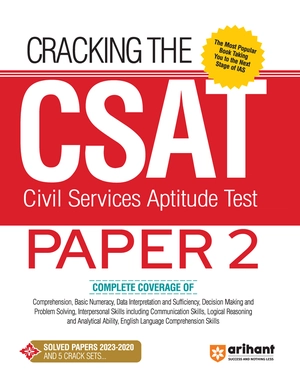
Every year, the candidates for the government and all-India public services are chosen through the Union Public Service Commission's (UPSC) administration of the public Services Examination (CSE). The Indian Administrative Service (IAS), Indian Police Service (IPS), Indian Foreign Service (IFS), Indian Revenue Service (IRS), Indian Audit and Accounts Service, and other positions are among the ones for which this recruiting exam is held. For 1056 positions, the Union Public Service Commission published the UPSC CSE Notification 2026.
UPSC Exam Date 2026 | |
Events | Dates |
Release of Notification | February 04, 2026 |
Opening date for online application process | February 04, 2026 |
Closing date for online application process | February 24, 2026 |
Date of Preliminary examination | May 24, 2026 |
Date of Main written examination | August 21, 2026 |
Date of Personality Test (Interview) | To be announced later |
Final result | To be announced |
The candidates are selected through three phases of exams:
Educational Qualification
The candidates must possess a Bachelor Degree in any stream from a recognised university. Candidates in final year of their graduation can also apply and submit the proof of passing the degree examination before the specified date.
Age Limit
The candidate must be between 21 and 32 years of age of the examination year. Certain age relaxations are also provided to reserve and other specified categories.
Negative marking - There is negative marking in the UPSC 2026 Prelims Examination. For every wrong answer 1/3rd or 0.33 marks will be deducted.
Time Duration- There would be two papers for the preliminary exam, each lasting two hours. And for the Mains Examination each paper is of 3hours duration.
No. of questions- The number of questions for the Prelims Examination is 100 questions with a total of 200 marks to be solved in 2 hours.
Types of question- The questions will be of objective type/multiple choice type for the Prelims Examination and for the Mains Examination it would be Subjective type And the paper would be conducted in both Hindi and English.
Mode of Exam- The UPSC 2026 Examination, both Prelims and Mains would be conducted in Offline Mode.
Qualifying Marks- The qualifying marks for the General Studies Paper would be fixed to minimum of 33%. For the Mains Examination only Paper A (Indian Language) and Paper B (English) are Qualifying in Nature.
For Preliminary Examination
Paper | Subject | No. of Ques. | Max. Marks | Duration |
Paper-I | General Studies | 100 | 200 | Each paper shall be of 2 hours duration |
Paper-II | CSAT | 80 | 200 | |
Total | 400 | |||
For Main Written Examination
Qualifying Papers
Paper A One of the Indian Languages from the Languages in the Eighth Schedule of the Constitution.
Paper B English
Both papers will be of 300 marks each and of 3 hours duration.
Paper | Subject | Max. Marks | Duration |
Paper-I | Essay | 250 | Each paper shall be of 3 hours duration |
Paper-II | General Studies - I | 250 | |
Paper-III | General Studies - II | 250 | |
Paper-IV | General Studies - III | 250 | |
Paper- V | General Studies - IV | 250 | |
Paper -VI | Optional subject- Paper 1 | 250 | |
Paper- VII | Optional subject- Paper 2 | 250 | |
Total | 1750 | ||
Optional Subjects Agriculture; Animal Husbandry and Veterinary Science; Anthropology; Botany; Chemistry; Civil Engineering; Commerce and Accountancy; Economics; Electrical Engineering; Geology; Geography; Indian History; Law; Mathematics; Management; Mechanical Engineering; Medical Science; Physics; Philosophy; Political Science and International Relations; Psychology; Public Administration; Statistics; Sociology; Zoology; literature of any one of the following languages: Assamese, Bengali, Bodo, Dogri, Gujarati, Hindi, Kannada, Kashmiri, Konkani, Maithili, Malayalam, Manipuri, Marathi, Nepali, Odia, Punjabi, Sanskrit, Santhali, Sindhi, Tamil, Telugu, Urdu and English.
Syllabus
Part A—Preliminary Examination
Paper-I (General Studies) 200 Marks/2 hr
Paper-II (CSAT) 200 Marks/2 hr
Note 1: Paper-II of the Civil Services (Preliminary) Examination will be a qualifying paper with minimum qualifying marks fixed at 33%.
Note 2: The questions will be of multiple choice, objective type.
Note 3: It is mandatory for the candidate to appear in both the Papers of Civil Services (Preliminary) Examination for the purpose of evaluation. Therefore a candidate will be disqualified in case he/she does not appear in both the papers of Civil Services (Preliminary) Examination.
Part B—Main Examination
The main Examination is intended to assess the overall intellectual traits and depth of understanding of candidates rather than merely the range of their information and memory.
The nature and standard of questions in the General Studies papers (Paper II to Paper V) will be such that a well-educated person will be able to answer them without any specialized study. The questions will be such as to test a candidate’s general awareness of a variety of subjects, which will have relevance for a
career in Civil Services. The questions are likely to test the candidate’s basic understanding of all relevant issues, and ability to analyze, and take a view on conflicting socio-economic goals, objectives and demands. The candidates must give relevant, meaningful and succinct answers.
The scope of the syllabus for optional subject papers (Paper VI and Paper VII) for the examination is broadly of the honours degree level i.e. a level higher than the bachelors’ degree and lower than the masters’ degree. In the case of Engineering, Medical Science and law, the level corresponds to the bachelors’ degree.
Syllabi of the papers included in the scheme of Civil Services (Main) Examination are given as follows:—
Qualifying Papers on Indian Languages and English
The aim of the paper is to test the candidates' ability to read and understand serious discursive prose, and to express ideas clearly and correctly, in English and Indian language concerned.
The pattern of questions would be broadly as follows:
(i) Comprehension of given passages.
(ii) Precis Writing.
(iii) Usage and Vocabulary.
(iv) Short Essays.
Indian Languages:—
(i) comprehension of given passages.
(ii) Precis Writing.
(iii) Usage and Vocabulary.
(iv) Short Essays.
(v) Translation from English to the Indian Language and vice-versa.
Note 1: The papers on Indian Languages and English will be of Matriculation or equivalent standard and will be of qualifying nature only. The marks obtained in these papers will not be counted for ranking.
Note 2: The candidates will have to answer the English and Indian Languages papers in English and the respective Indian language (except where translation is involved).
Paper–I
Essay: Candidates may be required to write essays on multiple topics. They will be expected to keep closely to the subject of the essay to arrange their ideas in orderly fashion, and to write concisely. Credit will be given for effective and exact expression.
Paper- II
General Studies-I: Indian Heritage and Culture, History and Geography of the World and Society.
Paper- III
General Studies- II: Governance, Constitution, Polity, Social Justice and International relations.
associations, donors, charities, institutional and other stakeholders.
Paper- IV
General Studies-III: Technology, Economic Development, Bio diversity, Environment, Security and Disaster Management
Paper- V
General Studies- IV: Ethics, Integrity and Aptitude
PAPER-VI & PAPER VII
Optional Subject Papers I & II
Candidate may choose any optional subject from amongst the List of Optional Subjects given in Para 2.
For Preliminary Examination General Studies Paper 1:-
Subject | Difficulty Level | Good Attempts |
Current Affairs | Easy to Moderate | 9 |
Geography and Environment | Easy to Moderate | 35-36 |
Ancient History | Difficult | 2-5 |
Medieval History | Difficult | 2-5 |
International Affairs and Others | Moderate | 3 |
Economic and Social Development | Moderate to Difficult | 16 |
Polity | Easy to Moderate | 15 |
Science and Technology | Moderate | 8 |
Total | Moderate | 90 |
For Preliminary Examination CSAT paper:-
Subject | Difficulty Level | Good Attempts |
Reasoning Ability | Moderate | 13-14 |
Reading Comprehension | Moderate | 27 |
Basic Numeracy and Maths (including Data Interpretation) | Moderate | 39-40 |
Total | Moderate | 80 |
E-admit cards will be issued to the eligible candidates three weeks before the commencement of the examination. No Admit Card will be sent by post.
Following are the steps to download the admit card:
Follow the below steps to check the UPSC IAS result
The Cut Off for the UPSC 2026 Examination for Prelims and Mains would be released with result declaration and the Answer Key.
The candidates can check the Answer Key by following the steps given below:
Check below a few general tips and tricks to crack the exam:
To apply online, follow the below mentioned steps:
How tough is the UPSC 2026 Examination?
There are three stages to the UPSC Exam 2026. The first exam to be administered is the syllabus-based, objective-type Prelims Exam. The Mains Exam, which is of a subjective nature and requires study for each topic, is the next step. Qualified candidates move on to the Interview round, also called the Personality round, after passing the first two steps.
Is there negative marking in the UPSC 2026 Examination?
Yes there is negative marking in the Prelims paper of the UPSC 2026 Examination. 1/3rd or 0.33 marks are deducted for every wrong answer attempted.
How many numbers of times a candidate can appear for the UPSC Examination?
The age limit provided by the Union Public Service Commission for the year 2026 is from 21 to 32 years. The number of attempts category wise is General – 6 attempts, SC/ST- Unlimited, OBC’s- 9 and PwBD-9 attempts.
When will admit card of the UPSC 2026 Examination be released?
The admit card for the UPSC 2026 Examination will be released three weeks before the examination is conducted on the official website.
What are the passing marks for the UPSC 2026 Examination?
The Prelims Paper 1, i.e., General Studies has minimum qualifying marks of 33%. And the Mains Paper 1 and Paper 2 are qualifying in nature.